
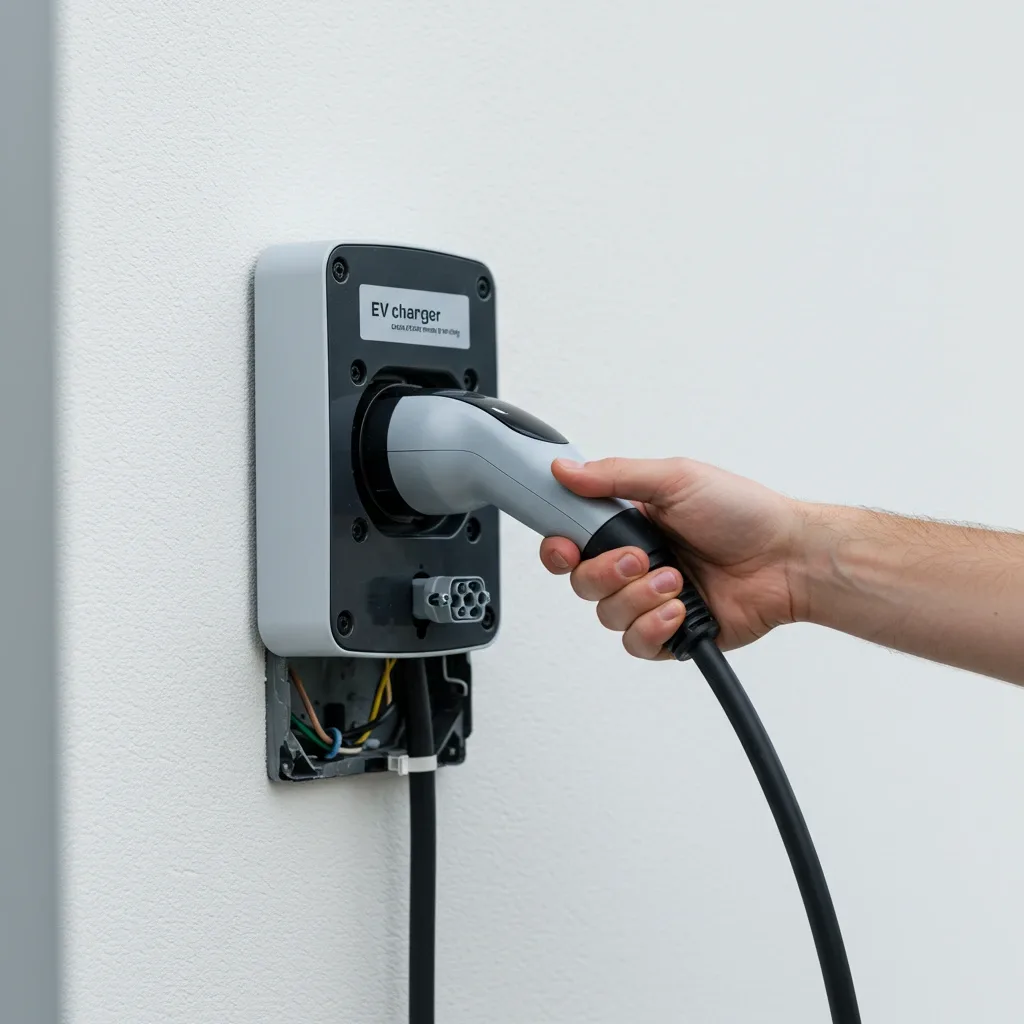
Getting an EV charger installed at your Tweed Heads home should honestly be one of the easier decisions you make after buying an electric car. Most of the time it is, you book a local electrician, they come out, a few hours later you’re plugging in for the first time and wondering why you didn’t do it sooner.
But every now and then it doesn’t go that smoothly. Return visits. Unexpected costs on the day. A charger that turns out to be the wrong model for your solar setup. Compliance paperwork that never got filed properly.
The frustrating part? Nearly all of these problems come down to the same handful of avoidable mistakes. Things that are easy to overlook when you’re excited about your new car and just want to get sorted quickly.
Here are the five most common mistakes Tweed Heads homeowners make when hiring an EV charger installer – and exactly what to do instead.
Mistake 1 – Buying the charger before speaking to an electrician
This one is completely understandable. You’ve just bought an EV, you’ve been down the YouTube rabbit hole, you’ve read the forums, you’ve landed on a Zappi or a Wallbox, and you’ve ordered it before you’ve thought about the installation. Exciting times.
The problem is that the right charger for your home depends entirely on your home’s specific electrical setup — and you won’t know that until an electrician has actually looked at it in person.
Here’s how this goes wrong in practice:
You buy a 22kW three-phase charger because it’s the fastest on the market, but your home runs on single-phase power like most homes in NSW. The charger still works — just at 7kW. You’ve paid for capability you can’t use.
Or you buy a solar-integrated smart charger but your inverter brand isn’t compatible with it out of the box. Your electrician can make it work, but it needs an extra component that wasn’t in the original quote.
Or the charger you’ve chosen requires a specific type of RCD that your existing switchboard can’t accommodate without an upgrade — another cost that wasn’t in your budget.
None of these situations are disasters, but every single one of them is avoided by having a 30-minute conversation with your electrician before you hit purchase.
What to do instead: Book the site assessment first. Get the charger recommendation from your electrician, then buy. Most good local installers in Tweed Heads will supply the unit as part of the job anyway, which removes the guesswork entirely and means the hardware is covered under the same workmanship warranty. You can learn more about what a full EV charger installation involves before you commit to anything.
Mistake 2 — Going with the cheapest online quote
There’s no shortage of companies offering EV charger installation quotes online right now. Fill in a form, describe your home, get a number back in minutes. Some of these quotes look very attractive.
They look attractive because they’re priced for the simplest possible job — short cable run, no switchboard work, straightforward single-storey garage close to the board. If your home fits that description perfectly, you might be fine. But if anything is even slightly more complex — an older switchboard, a long cable run to a detached carport, double-brick walls, a parking space on the opposite side of the house — you’ll find out on installation day when a variation gets added to the original price.
There’s also the question of who actually turns up. National EV charging companies frequently dispatch subcontractors across regional areas like the Northern Rivers. The person who installs your charger may have limited familiarity with the electrical setups common in older Tweed Heads homes, no ongoing relationship with you, and no particular reason to go the extra mile on a small residential job in a regional NSW suburb.
When something comes up six months later — a tripping RCD, an app connectivity issue, a question about solar configuration — you’re raising a support ticket with a company that doesn’t know your home and may have sent a completely different contractor last time.
What to do instead: Choose a licensed local electrician who visits your property before quoting, gives you a fixed price based on what they’ve actually seen, and is available for follow-up because they live and work in your area. Their reputation is built entirely on what Tweed Heads homeowners say about them — that accountability matters.

Mistake 3 — Discovering your switchboard issues on installation day
A surprising number of homeowners reach installation day without knowing their switchboard needs attention first. This isn’t anyone’s fault when there’s been no site assessment — but it is completely avoidable when there has been one.
Many homes across Tweed Heads, Banora Point, and Kingscliff were built in the 1970s and 80s. Some still have original ceramic fuse boards that have never been updated. Others have newer-looking boards that were installed years ago and are now running at full capacity with no room for a new dedicated circuit.
An older or crowded switchboard isn’t a dealbreaker — it just needs to be upgraded before the EV charger goes in. The problem is discovering this on the day when you’d planned for a two-hour job. Now it’s a full day’s work, and potentially a wait while additional materials are sourced.
Watch out for these signs that your switchboard might need attention:
- Ceramic fuses instead of modern circuit breakers
- No safety switches or RCDs already installed
- A board that looks packed with no obvious spare slots
- Nuisance tripping when you run multiple heavy appliances at the same time
- A home built before 1990 with a board that’s never been replaced
What to do instead: During the site assessment, specifically ask your electrician to check whether your switchboard is EV-ready. If it needs work, get a switchboard upgrade quoted alongside the charger installation so both can be done in a single visit with no surprises on the day.
Mistake 4 — Not thinking about solar until after the charger is already installed
Tweed Heads and the broader Northern Rivers region have some of the highest rooftop solar uptake in NSW. If your home already has panels — or you’re planning to add them — installing an EV charger without considering how the two systems work together is one of the more expensive oversights you can make.
Here’s the situation most people don’t realise they’re in. A standard charger installed without solar awareness will charge your car whenever it’s plugged in, typically in the evening after you get home from work. That means you’re drawing from the grid at one of the more expensive times of day in NSW. Meanwhile during the middle of the day, your solar panels are generating at full output and that surplus is being exported back to the grid at feed-in tariff rates that have fallen sharply in recent years.
A solar-integrated smart charger turns this around completely. It has a sensor fitted at your switchboard that monitors your solar generation and household usage in real time. When your panels are producing more than your house is consuming — usually between around 10am and 3pm on a clear day — the charger automatically redirects that surplus power straight into your car’s battery rather than exporting it.
For a Tweed Heads homeowner driving 35–40km a day, this covers the majority of daily charging costs using electricity you’re already generating for free. The system runs automatically once configured. You don’t think about it again.
Where this becomes a costly mistake is timing. If you install a standard charger now and later decide you want solar integration, you may need to replace the charger unit entirely — and potentially redo elements of the switchboard wiring. Getting it right from the start saves that double-up. If you’re unsure how the whole process works, our guide on how to charge an electric car at home covers it in detail.
What to do instead: Tell your electrician at the site assessment whether you have solar, what inverter brand you have, and whether you’re planning to add panels in the next year or two even if you don’t have them yet. They’ll factor it into the charger recommendation from day one.
Mistake 5 — Not asking about NSW compliance and paperwork upfront
This is the easiest one to overlook because it all happens in the background — but it’s the one that creates the biggest headaches down the track.
In NSW, EV charger installation is classified as prescribed electrical work. That means it must be completed by a licensed electrician who issues a Certificate of Compliance for Electrical Work (CCEW) on completion. This document is your official proof that the installation was done legally, safely, and to Australian Standards.
On top of that, for most Level 2 EV charger installations in NSW, your electrician is required to notify Endeavour Energy — the distribution network provider for the Tweed Heads area — as part of the job. This is a regulatory requirement, not optional, and it should be handled by your installer without you needing to chase it.
Here’s where the mistake happens. Some homeowners — particularly those who’ve used online platforms to find the lowest-priced installer — get the charger installed and a verbal “all good” on the way out. No certificate issued. No confirmation the Endeavour Energy notification was lodged.
This sits quietly in the background until it becomes a problem. A home insurance claim involving electrical work, a property sale where the buyer’s solicitor requests compliance documents, or a future inspection — any of these can expose a missing CCEW, and rectifying it after the fact is significantly more expensive and disruptive than doing it correctly the first time.
Part of this is also about RCD protection — a compliant EV charger installation must include the correct residual current device fitted to the dedicated circuit, which any properly licensed electrician will handle as a matter of course.
What to do instead: Before booking any installer, ask two direct questions. First: “Will you provide the Certificate of Compliance for Electrical Work on completion?” Second: “Do you handle the Endeavour Energy notification as part of the job?” A properly licensed local electrician will say yes to both without hesitation. Any vagueness is a reason to keep looking.
The common thread through all five mistakes
Every mistake on this list traces back to the same root cause — skipping the site assessment or choosing an installer who doesn’t do one.
A proper on-site visit before any money changes hands is what prevents buying the wrong charger, catches switchboard issues early, surfaces the solar conversation at the right time, and confirms the installer knows their compliance obligations. It costs nothing and solves almost everything.
Why Tweed Heads homeowners choose Blue Ridge Electrical
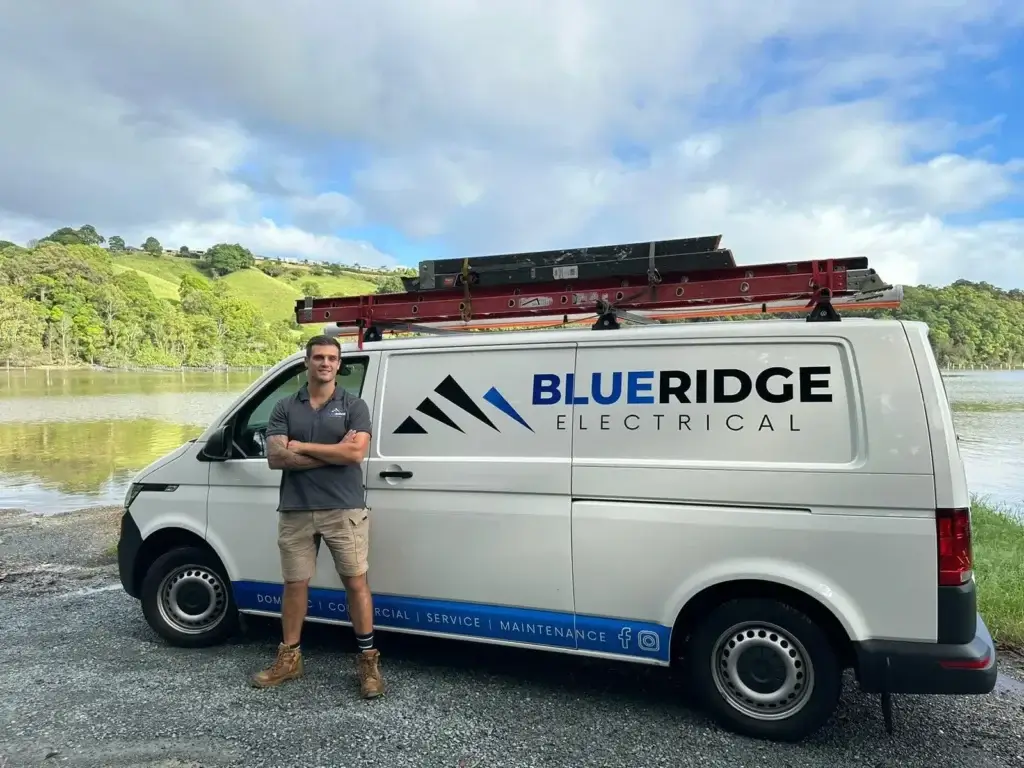
Blue Ridge Electrical is a licensed local electrical business based in Tweed Heads, holding licences for both NSW and QLD. Every EV charger installation starts with a free on-site assessment — we visit your property, check your switchboard, plan the cable route, and recommend the right charger for your car and solar setup before you spend a dollar.
On the day of installation we handle everything end to end — dedicated circuit, correct RCD protection, charger mounting and wiring, app and solar configuration, Endeavour Energy notification, and your Certificate of Compliance for Electrical Work handed to you before we pack up.
No subcontractors. No online guesswork. No surprises on the bill.
We cover Tweed Heads, Banora Point, Kingscliff, Cabarita Beach, Pottsville, Murwillumbah, Bilambil Heights, Terranora, Fingal Head, and properties on the QLD side of the border including Coolangatta and Tugun.
Get a free EV charger quote
The fastest way to avoid all five of these mistakes is a free site assessment. We come out to your property, check everything that needs checking, and give you a clear fixed quote – no variations on installation day, no paperwork gaps, no wrong charger for your setup.
Frequently Asked Questions
How do I know if my Tweed Heads home needs a switchboard upgrade before getting an EV charger?
The only reliable way to find out is a site assessment. Common signs include ceramic fuses, no safety switches, a packed board, or a home built before 1990 with an original switchboard. Your electrician will confirm during the visit and quote both together if needed.
What is a Certificate of Compliance for Electrical Work and do I really need it?
Yes — it’s the official NSW document proving your installation was completed legally by a licensed electrician to Australian Standards. You’ll need it for home insurance, property sales, and warranty claims. Always ask for it before booking.
Why shouldn't I just go with the cheapest quote I find online?
Online quotes are built around the simplest possible job. Any complexity in your home — older switchboard, long cable run, double-brick walls, detached garage — typically shows up as a variation on installation day. A local electrician who visits first gives you a genuinely fixed price.
Can I install a solar-compatible charger if I don't have solar panels yet?
Yes, and it’s often worth doing. Installing a solar-ready smart charger now means no additional electrical work is needed when your panels go in. Mention your plans to your electrician at the site assessment.
Does Blue Ridge Electrical cover both sides of the Tweed Heads border?
Yes. We hold licences for both NSW and Queensland and regularly install EV chargers across Tweed Heads, Banora Point, Kingscliff, Coolangatta, Tugun, and surrounding suburbs on both sides.